
Why Is My Pet So Anxious? Understanding the Water Element in TCM
- Jul 17
- 12 min read

You know the pet. Maybe it’s yours. The one who hears the first distant rumble of thunder and is already trembling under the bed before the storm even registers on your phone’s weather app. The one who turns into a furry Olympic sprinter the second fireworks crack in the distance, scaling fences and slipping collars in a full body panic. Or the one who goes stiff and wide eyed the moment the vet’s office door opens, like they’re bracing for something terrible no matter how many treats are involved.
We tend to explain this away with simple labels. “She’s just anxious.” “He’s always been skittish.” “That’s just his personality.” And on the surface, sure, that’s true. But in Traditional Chinese Medicine, fear isn’t just a personality quirk or a behavioral footnote. It’s an emotion tied directly to a specific organ system and a specific element, and understanding that connection can completely change how you support an animal who struggles with it.
That element is Water. And if you have a pet who panics easily, startles hard, or seems to carry a low hum of anxiety under the surface even on ordinary days, the Water Element is where a lot of those answers live. This post is going to walk through what Water represents in the body, what imbalance actually looks like in dogs, cats, and horses, why some animals seem to get more fearful as they age, and what you can do to help bring a fearful animal back toward steadiness.
What Is the Water Element, Anyway?

In the Five Element framework of Traditional Chinese Medicine, every living being is understood through five interconnected elements: Wood, Fire, Earth, Metal, and Water. Each element corresponds to a season, an emotion, a pair of organ systems, and a general constitutional tendency. Think of it less like a rigid category and more like a lens, a way of understanding why different animals (and people) respond to the same stressors so differently.
Water is the element of winter, depth, and stillness. Where Fire is associated with joy and expansion, and Wood with growth and assertiveness, Water is turned inward. It governs the body’s deepest reserves, the parts of an animal’s constitution that aren’t visible day to day but quietly shape how much resilience they have available when life throws something stressful at them. An animal with strong, balanced Water tends to be the picture of quiet confidence, steady, grounded, and able to recover quickly from a scare. An animal with depleted or imbalanced Water is the one who seems to be running on empty when it comes to handling stress, even if nothing is obviously “wrong” with them physically.
Understanding your pet’s Water Element isn’t about slapping a label on them. It’s about recognizing a pattern so you can actually support it, rather than just managing the issues as they come up.
The Kidney and Bladder Meridians: What They Actually Govern

In TCM, the Water Element is associated with two organ systems: the Kidney and the Bladder. It’s worth noting up front that these don’t map perfectly onto the Western organs of the same name. TCM organ systems are broader, functional categories that influence far more of the body than their anatomical counterparts.
The Kidney system in TCM is considered the root of the body’s deepest vitality. It stores what’s known as Jing, often translated as essence. Jing is best understood as a kind of energetic inheritance, the reserve of vitality an animal is born with, largely determined by genetics and early development, that gets drawn upon throughout their life. Unlike Chi, which can be replenished daily through food, rest, and movement, Jing is more like a fixed savings account. It can be protected and supported, but it naturally depletes with age, illness, or chronic stress.
Because Jing underlies so much of the body’s foundational strength, the Kidney system also governs the bones, the marrow, the ears, and the lower back and hindquarters. This is part of why Water Element imbalance so often shows up as a paired pattern: an anxious temperament alongside physical stiffness or weakness through the back end. A horse with hock issues and a spooky temperament, or an older dog with both noise phobias and hind end weakness, may be showing two sides of the same underlying picture rather than two unrelated problems.
The Bladder meridian runs the emotion of fear. Not fear as a passing reaction to something scary in the moment, but fear as a constitutional tendency, the emotional pathway some animals default to when they’re stressed, unsure, or overwhelmed. Willpower is tied to this system as well. A well balanced Water type shows quiet resolve and the ability to push through discomfort. An imbalanced one tends to freeze, retreat, or shut down instead.
Fear as an Emotion, Not Just a Behavior

Think about the last time you were genuinely startled, someone jumped out at you, a car horn blared out of nowhere, you nearly dropped your coffee. Your heart raced, maybe you gasped or jumped back, and then a few seconds later you laughed it off and went back to what you were doing. That quick recovery is what a balanced Water response looks like, in people and in pets.
Now think about the difference between that and someone who’s dealing with real anxiety, who can’t shake that jittery, on edge feeling even hours after something startled them, who starts anticipating the next scare before it even happens. That’s the imbalanced version, and it’s exactly what shows up in our pets too.
This is the piece that’s easy to miss if you only think about fear as a behavior problem to correct. A dog who bolts during fireworks isn’t just poorly trained or under-socialized. Their body is running an emotional program that TCM has been mapping for thousands of years, one rooted in a specific organ system, with its own patterns of imbalance and its own paths back toward balance.
Balanced Water Looks Like
Calm confidence in new or uncertain situations, a dog who checks out a new environment and settles in within a few minutes, or a horse who spooks at something unfamiliar but recovers within a stride or two.
A healthy startle response that resolves quickly, a jump at a loud noise, then back to normal almost immediately.
Steady willpower and resilience under stress, a cat who tolerates a vet visit with minimal fuss, or a dog who works through a stressful training exercise without shutting down.
Strong, stable hindquarters and movement.
Good, restful sleep even somewhere unfamiliar.
Imbalanced Water Looks Like

Anxiety that lingers well past the moment that caused it, or shows up even when nothing is actually wrong.
Storm, fireworks, or noise phobias that seem to get worse over time instead of better, similar to how unresolved fear in people can turn into a growing phobia rather than fading with exposure.
Freezing, hiding, or bolting when startled, with a slow, shaky recovery afterward, a cat who disappears under the bed for hours after a single loud noise, or a horse who won’t settle for the rest of a ride after spooking once.
House training regression or increased urination during stressful moments.
Stiffness, weakness, or sensitivity through the lower back and hindquarters, common in older dogs and cats with a Water imbalance.
A general “waiting for the other shoe to drop” energy, even during calm, ordinary moments.
Why Fireworks, Storms, and Vet Visits Hit Water Types Hardest
Anyone who’s sat with a friend who has anxiety knows this pattern. Give the same stressful situation, a fire drill, a surprise phone call, a crowded room, to two different people, and you’ll get two completely different reactions. One person gets irritated and snaps at someone. Another person goes quiet, shrinks back, or wants to leave entirely. Same trigger, different emotional wiring.
Pets work the same way. A Wood dominant dog faced with a stressful vet visit might respond with frustration, growling, or reactivity (the emotion of wood is anger). A Water dominant dog facing that exact same vet visit shuts down, trembles, or tries to bolt for the door. It’s not about the situation itself, it’s about which emotional pathway that particular animal defaults to under pressure, and for Water types, that pathway is fear.
This also explains something a lot of owners notice as their pets get older: a dog who used to shrug off fireworks starts panicking over them instead, or a cat who was never bothered by thunder suddenly can’t handle it. Since Water houses Jing, the deep energetic reserve every animal is born with, natural depletion over time can mean less resilience left in the tank to bounce back from a scare the way they once could. It’s not that they’re becoming more anxious for no reason. It’s that the resilience that used to buffer them has worn a little thinner, the same way people often find they have less patience for chaos as they get older too.
The Water-Wood Connection: When Fear Turns Into Reactivity

One of the most useful things about the Five Element framework is that it doesn’t look at fear as an isolated problem to fix. It looks at it as one piece of a bigger, interconnected system. In TCM, the elements feed into and affect each other in what’s called the generative cycle, and Water is no exception.
Water is considered the “mother” of Wood in this cycle, meaning a depleted Water Element can eventually affect the Liver system too, which governs Wood and is associated with frustration and reactivity. This is part of why a chronically fearful animal can sometimes tip into unexpected reactivity or aggression over time, the fear hasn’t disappeared, it’s just found a different outlet. A dog who’s been anxious for years may suddenly start snapping defensively. Recognizing this connection is exactly why TCM practitioners look at the whole animal rather than just the symptom in front of them, and why supporting Water early can help prevent bigger imbalances down the road.
Which Pets Are Most Prone to Water Imbalance?

Some animals are simply born more Water dominant, the same way some people are naturally more anxious or more even keeled regardless of what life throws at them. But there are also patterns worth watching for:
Aging pets: As Jing naturally depletes over a lifetime, older dogs, cats, and horses often become more fear reactive than they were in their younger years, even without any single traumatic trigger.
Rescue animals with unknown histories: Pets who experienced instability, neglect, or trauma before coming into your life often carry a heavier Water imbalance, since chronic early stress draws heavily on that same reserve.
High stress lifestyles: Working dogs or any animal in a demanding, high stimulation environment may burn through their Water reserves faster than a pet with a quieter day to day life.
Certain breed tendencies: While every individual animal is different, some breeds and lines are more genetically predisposed toward anxious or reactive temperaments, which often traces back to a naturally lower baseline of Water Element strength.
None of this means these animals are broken or beyond help. It just means they may need more consistent, proactive support to keep their Water Element as balanced as possible.
Acupressure Points That Support the Water Element
While professional acupressure sessions offer the most targeted support, there are a few gentle points you can learn to work into your pet’s routine at home. (Curious how acupressure compares to acupuncture? We've broken down the differences here.) As always, this is meant to support the body’s own natural balance, not diagnose or treat any condition, and any animal with a significant behavioral or medical concern should also be seen by a veterinarian.
Before you start, it helps to know how to actually work a point. Acupressure begins with intention. Before you even touch your animal, take a moment to bring your full focus to them, not the errands still on your list or what tomorrow looks like. In this moment, you’re there to support them and nothing else, and animals notice that shift in energy.
From there, use your fingers to very gently massage or hold each point. The goal is light, steady contact that encourages blood flow so chi can move through the point, not firm pressure that blocks it. Hold each point for about 30 to 45 seconds, or until you notice a release. A release is your animal’s way of telling you they feel good, often shown as a lick, a yawn, a slow blink in your direction, or even a sigh. This is their relaxation time, and it’s also where the bond between you deepens, built on you listening to what they need in that moment.
Bladder 23: Found along either side of the spine near the lower back, this point connects directly to the Kidney system and is a go-to for supporting Water Element balance, especially in animals who also show hindquarter stiffness alongside anxiety.
Yin Tang: Positioned just above the eyes, this calming point is popular for supporting animals through stressful or overstimulating moments, and is gentle enough to use in the middle of a mildly stressful situation, not just beforehand.
Heart 7: Found on the inside of the wrist, this point is often used to support emotional steadiness, especially for animals who struggle to settle down after being startled.
A few slow, gentle circles on these points during a calm moment, not mid panic, can help an anxious pet build a stronger baseline over time. Consistency matters more than intensity here. Working these points for even a minute or two a few times a week, especially in the lead up to a known stressor like a holiday with fireworks, tends to be far more effective than trying to intervene only once the panic has already set in.
Complementary Support Tools for Anxiety in Pets
Acupressure is powerful on its own, but it works even better paired with other calming supports, especially for pets whose anxiety runs deep or shows up frequently. Think of it like a toolkit rather than a single fix. Thundershirts and calming wraps use gentle pressure to help ground an anxious nervous system. Pheromone diffusers can help create a more settled environment at home. And more pet owners are also exploring calming supplements, including CBD, as a complementary piece of that toolkit.

If you're considering CBD as part of that toolkit, it helps to understand what it's actually doing. According to Dr. Silver, one of the earlier veterinarians to research and advocate for cannabinoid use in companion animals, CBD works by supporting the endocannabinoid system, the body's own regulatory network for mood, stress response, sleep, and overall balance, rather than sedating a pet into calm. That distinction matters, since the goal here is the same one we've been talking about with acupressure: supporting the nervous system's own ability to self regulate, not masking a response.
Dr. Silver's guidance also echoes something true of most calming support, holistic or otherwise: consistency beats intervention after the fact. For predictable stressors like fireworks, storms, travel, grooming, or vet visits, starting CBD ahead of time gives it a chance to support your pet's stress response before it's needed, rather than reaching for it mid panic. And because every animal is different, dosing isn't one size fits all. Weight, age, metabolism, and the severity of the anxiety all play a role, which is why starting low and adjusting gradually while watching your pet's response is the general approach.
As with any supplement, quality matters. Products formulated specifically for pets, third-party tested, and clearly labeled for cannabinoid content give you a lot more confidence than something pulled off a general shelf. Bailey's is one brand worth having on your radar here, particularly for pet parents looking for a proactive, veterinary-informed option to add to their calming toolkit alongside acupressure and the other approaches we've covered. (This post contains an affiliate link. If you purchase through it, I may earn a small commission at no extra cost to you.)
The goal with any of these tools, acupressure included, is supporting the body’s own ability to self regulate, not sedating or masking symptoms. An anxious pet who feels safer and steadier is one who can actually engage with training, socialization, and daily life instead of just getting through it.
When to Seek Additional Support
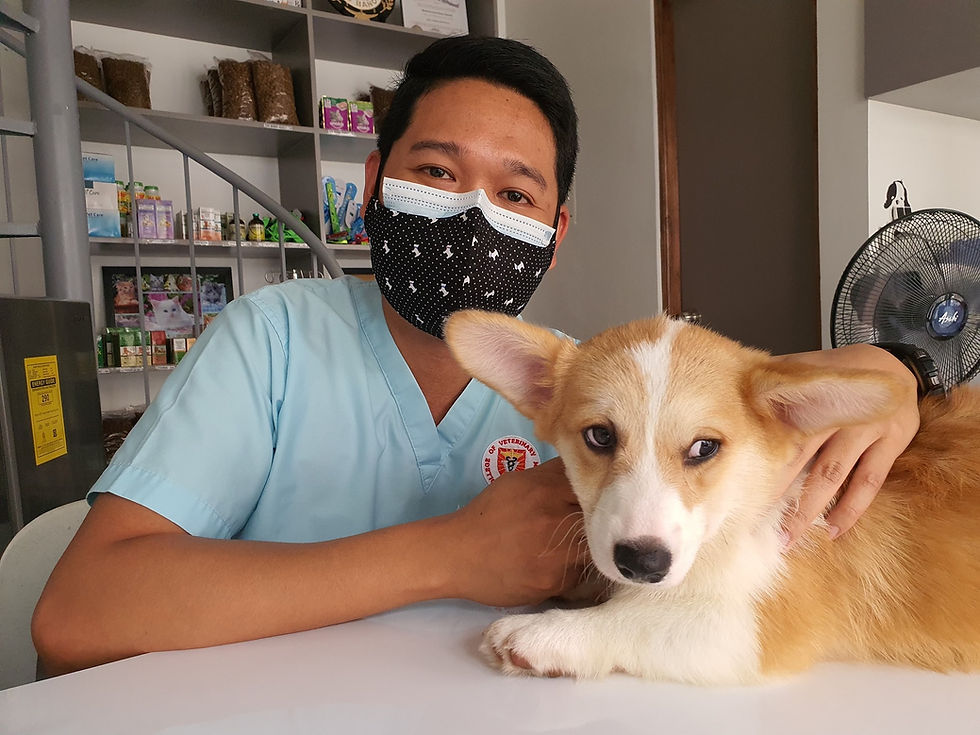
It’s worth understanding where TCM fits alongside conventional veterinary care, because they’re not competing systems, they’re complementary ones looking at the same animal through different lenses. Your vet is essential for ruling out physical causes of anxiety, things like pain, thyroid imbalances, or neurological issues can all masquerade as behavioral fear, and for addressing severe cases where medication or behavioral therapy may be necessary. TCM approaches like acupressure work alongside that care, supporting the nervous system’s own capacity to self regulate rather than replacing medical treatment.
A good rule of thumb: if the fear response is new, sudden, or escalating quickly, or if it’s paired with other changes like appetite shifts, lethargy, or aggression, see your vet first. If it’s a longer standing pattern, a dog who’s always been a bit of a worrier, a cat who’s never loved thunderstorms, that’s often where holistic support can make the most meaningful, lasting difference, especially paired with patience and consistency at home.
Supporting the Whole Animal
Fear doesn’t exist in isolation, and neither does your pet’s wellness. The Water Element is just one piece of a much larger picture that includes physical structure, movement, diet, and emotional health all working together. This is exactly why a holistic approach, one that looks at acupressure alongside things like red light therapy for physical recovery, kinesiology taping for structural support, and thoughtful nutrition, tends to create more lasting change than addressing anxiety as a standalone issue.
If you’re curious about the other four elements and how they interact with Water, take a look at our full breakdown of the Five Elements in animals. And if your pet’s anxiety seems tied to physical discomfort as well, our post on the basics of animal acupressure is a great next read.
Ready to Go Deeper?
If this glimpse into the Water Element made you look at your own pet a little differently, that’s exactly the kind of shift TCM is meant to create. Understanding which element your pet leans toward, and how all five elements interact, gives you a genuinely different way to support their wellbeing, one that goes beyond behavior modification and into understanding the why behind it.
Our Five Element Theory course walks through all five elements in depth, including how to recognize your own pet’s elemental tendencies, how imbalances show up physically and emotionally, and how to build a fuller picture of your pet’s overall wellness.
And if you’d rather have hands on support, mobile acupressure sessions are available throughout the Charlotte, NC area. I’d love to help your pet find a little more steadiness, one gentle point at a time.


