
Yes, Acupressure Works — And You've Been Doing It Your Whole Life
Updated: Jun 8

Acupuncture gets all the credibility. Acupressure gets the side-eye. But here's the thing — they're the same system. And chances are, you've already been using it without knowing.
Let's be honest. When most people hear the word "acupressure," something in the brain quietly files it next to crystals and incense. Meanwhile, acupuncture — needles, a clinical setting, a licensed practitioner — feels legitimate. Proven. Medical, even.
But here's what's worth knowing: acupressure and acupuncture are built on the exact same foundation. The same points. The same pathways through the body. The same understanding of how stimulating specific locations can influence pain, tension, digestion, anxiety, and overall wellbeing. The only difference is the method. Acupuncture uses needles to stimulate those points. Acupressure uses pressure. That's it.
And acupressure isn't the only non-invasive option — it sits alongside photopuncture (light therapy applied to acupuncture points) as part of a whole category of approaches that work with the body's own systems without breaking the skin. No needles, no injections, no electricity. Just intentional, targeted stimulation of points the body has responded to for thousands of years.
The same system. The same points. The only difference is how you stimulate them.
Here's what might actually surprise you though: you've almost certainly already used acupressure on yourself. Not in a formal setting, not with any training — just instinctively, the way the body tends to know things before the brain catches up. You pressed a point that helped, and it worked, and you probably never gave it a second thought.
That's what this is really about. Not convincing you that acupressure is worth trying — but showing you that you already know it works, because you've already felt it. And once you see that, applying it to your horse, your dog, or your cat starts to feel a lot less like a leap of faith.
This blog is written from the perspective of an animal acupressure practitioner, but it starts with you on purpose. Because the fastest way to understand why acupressure works for horses, dogs, and cats is to first recognize how it's already working in your own body. Stick with us.
You've Already Done This Without Thinking
Before we talk about horses or dogs or cats, let's stay with you for a moment. Because the best evidence that acupressure works isn't a study or a certification — it's what your own hands have done without being told to.
Think about the last time you had a tension headache. A long drive. A stressful meeting. Eye strain from too many hours at a screen. Where did your fingers go? Almost automatically, without thinking, most people reach for one of a handful of spots — and every single one of them is a documented acupressure point. You weren't following a protocol. You were just listening to your body, and your body already knew.
Here are the ones you've almost certainly already used:
Rubbing in circles when a headache is building or setting in

Almost everyone does this. The moment tension starts creeping up the sides of the head — from a long day, a stressful conversation, too many hours at a screen — the hands go up and the fingertips find the temples. You press in slow circles, and somewhere in that motion, something starts to ease.
What you're doing is stimulating two acupressure points that sit right at the outer edge of the eye socket — Gallbladder 1 and Triple Heater 23. These points sit along meridians that influence the head, the eyes, and the body's response to stress. The gallbladder meridian in particular runs along the entire side of the body from the outer corner of the eye down through the neck, shoulder, and hip — which is why tension in the head so often travels. Working the temple points helps interrupt that pattern, calming the nervous system and releasing the grip of a building headache before it takes hold. Your body already knows to go there. That's not coincidence.
That spot you press when you take off your glasses at the end of the day or when you feel frustrated
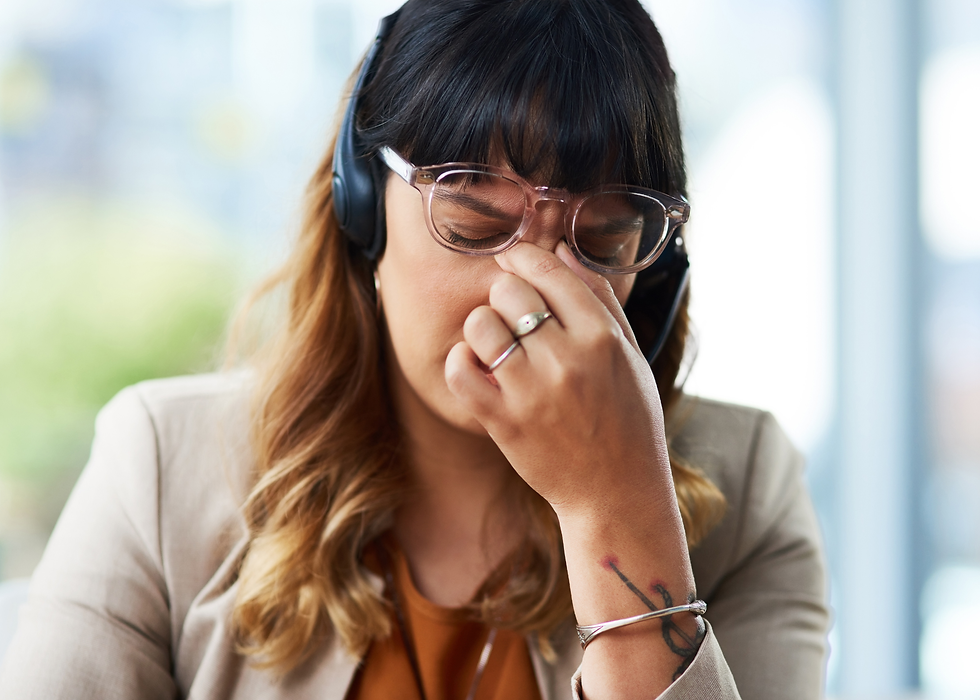
You know the feeling. It's the end of a long day — too much screen time, too much reading, maybe a long drive — and almost without thinking your fingers come up and press into the inner corners of your eyes, right where the nose meets the brow. There's something immediately satisfying about it, a release of pressure that feels almost structural.
That spot is Bladder 1, the first point on the bladder meridian — one of the longest meridians in the body, running from the inner corner of the eye all the way down the back of the head, along the spine, through the back of the legs, and to the little toe. As a starting point on such a far-reaching pathway, BL1 has a broad influence. Locally it relieves eye strain, sinus congestion, and frontal headaches. It's particularly effective for the kind of dull, heavy pressure that builds behind the eyes after extended focus. It's one of the most instinctively reached-for points on the entire face — and now you know exactly why it works.
The exact spot Sea-Bands press. Recommended by OBs and midwives everywhere
Sea-Bands are sold in every pharmacy, stocked in airport shops, tucked into hospital bags, and recommended routinely by obstetricians and midwives for morning sickness. Most people who wear them have no idea they're using acupressure. They just know they work. And they do — because the little plastic stud on the inside of that elastic band is pressing directly on one of the most researched acupressure points in existence.
Pericardium 6, also called Nei Guan, sits on the inner wrist about two finger-widths down from the wrist crease, between the two central tendons. It lies on the pericardium meridian, which is associated with the heart and the body's emotional and physical stress responses. Pe 6 has been studied in multiple clinical trials for its effectiveness in relieving nausea — including motion sickness, morning sickness during pregnancy, post-surgical nausea, and nausea related to chemotherapy. The evidence is strong enough that it's referenced in mainstream medical literature and recommended as a safe, drug-free option by conventional healthcare providers. When your doctor suggests Sea-Bands, they are — whether they know it or not — recommending acupressure. It's been hiding in plain sight all along.
That firm, slightly achy spot you press without knowing why

If you've ever pressed into the fleshy mound between your thumb and index finger and noticed a distinct, almost satisfying ache — you've found LI4. Most people discover this point on their own during a headache or a moment of tension, pressing it without any instruction and finding that it actually helps. That response isn't imagined. It's one of the most well-documented acupressure points in existence.
Large Intestine 4 has been studied extensively in peer-reviewed research for its effects on pain relief, headache reduction, and tension release throughout the upper body. It's located on the large intestine meridian, which travels from the hand up through the arm, shoulder, neck, and face — which explains why stimulating a point on your hand can relieve a headache at the top of your head. The characteristic aching sensation when you press it is called "de qi" in traditional Chinese medicine — it's the signal that the point is activated and responding. If you've felt it, you've experienced acupressure working in real time without ever knowing that's what it was.
Notice what all of these have in common: nobody taught you to reach for them. You just did. That instinct is real, and it points to something the body understands long before the mind has a framework for it.
Acupressure as a practice is simply taking that instinct and applying it with intention — knowing exactly which point to work, for how long, with what kind of pressure, and why. The body's response is the same either way. The knowledge just makes it more precise.
Everyday Products That Use Acupressure (Without Advertising It That Way)
Still not convinced? Let's take it out of the realm of instinct and into your medicine cabinet — because some of the most trusted, widely recommended products on the market work entirely on acupressure principles. They're sold in every pharmacy, stocked in hospital gift shops, recommended by doctors and midwives, and packed into travel bags around the world.
They just don't put "acupressure" on the label.
Seabands for Motion Sickness

Point: P6 — Pericardium 6 (Nei Guan)
Those stretchy elastic wristbands with the plastic stud work by applying continuous pressure to the P6 point on the inner wrist. P6 has been studied in multiple clinical trials for nausea relief — including motion sickness, post-surgical nausea, and chemotherapy-related nausea. They're sold in every Target and CVS. That's acupressure, fully mainstream, just wearing a different name tag.
Pregnancy Nausea Bands
Point: P6 — Pericardium 6 (Nei Guan)
OBs and midwives routinely recommend wrist acupressure bands as a safe, drug-free option for managing morning sickness. When your doctor hands you a recommendation for a wristband that presses on a specific point to relieve nausea — that is an acupressure referral. Full stop. The framework just doesn't always get named.
Acupressure headache clips & mats
Point: LI 4 — Large Intestine 4 & others
Headache relief clips designed to press the LI4 point between the thumb and forefinger have gone mainstream in wellness spaces — and acupressure mats that stimulate multiple points along the back and neck are now sold widely in sporting goods and wellness stores. The category has arrived. Most people buying them just don't realize they're practicing an ancient system.
Reflexology sandals & foot rollers
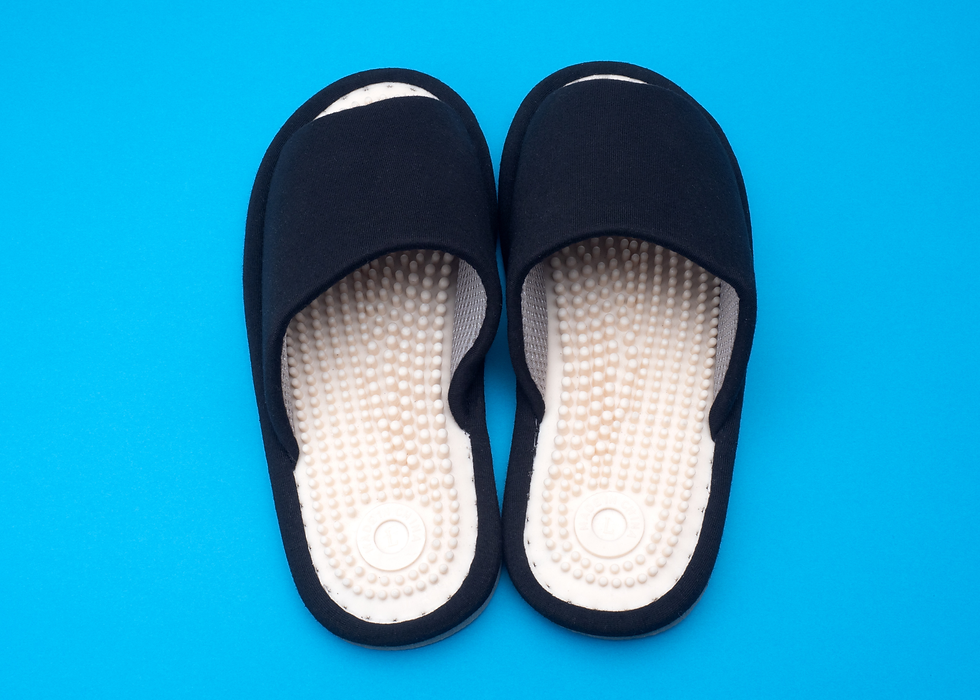
Point: Various — sole of the foot, Kidney 1
Foot reflexology products — textured insoles, wooden rollers, massage sandals — work on the principle that points on the sole of the foot correspond to organ systems throughout the body. That's the same meridian logic as acupressure. These products are sold everywhere from airport shops to big box stores.
When mainstream medicine quietly recommends a product that works by pressing a specific point on the body to relieve symptoms — that's acupressure. It's been in your life longer than you realized.
The throughline in all of these is the same: stimulating a specific point on the body produces a measurable, repeatable effect somewhere else in the body. That's the principle. That's what acupressure is built on. And that principle doesn't become less valid when it's applied by a trained practitioner rather than packaged into a wristband.
If anything, working with a certified practitioner who understands the full system — which points to combine, how much pressure, how long, and in what sequence — is simply a more intentional and informed version of what those products are already doing.
Acupuncture Didn't Come First — Acupressure Did
Here's something most people don't know: acupuncture as we recognize it today — with fine metal needles inserted into specific points — is not where this system began. It evolved from something far more instinctive, far more accessible, and far older. It began with hands.

Long before anyone crafted a needle, humans were pressing on painful spots, rubbing tense muscles, and applying pressure to areas of the body that brought relief. This wasn't a formal practice — it was instinct. The same instinct that sends your fingers to your temples during a headache, or to the bridge of your nose when your eyes are strained. Ancient peoples noticed that pressure on certain spots produced consistent, repeatable effects elsewhere in the body. They began to map those connections. And over thousands of years, that mapping became what we now call the meridian system.
The earliest tools used to stimulate these points weren't needles at all. They were sharpened stones — called Bian stones — ground and shaped into pointed tools used to press, rub, and stimulate specific locations on the body. Dating back to the Neolithic era, as far as 10,000 years ago, these stone tools are documented in ancient Chinese medical texts as the earliest known precursors to acupuncture. Over centuries they evolved into bone and bamboo instruments, then metal — bronze, iron, gold, and silver — eventually becoming the fine needles used in acupuncture today. But the points themselves, the pathways, the underlying system — all of that existed long before any tool was involved.
Acupressure isn't a simplified version of acupuncture. Acupuncture is an evolved version of acupressure. The hands came first.
This matters because it reframes the question entirely. When someone asks whether acupressure works, they're often implying that needles are the legitimate version and pressure is somehow a lesser substitute. But historically that's backwards. Pressure is the original. The needle is the tool that came later to access the same system with more precision. Both work because both are working with the same underlying pathways — the same points your body has been reaching for instinctively your entire life.
Same System, No Needles — Here's How It Actually Works
Now that you've recognized the instinct, let's put a framework around it. Because understanding what acupressure actually is, and where it comes from, is what takes it from "something I do when my head hurts" to a genuine, intentional wellness practice.
The Meridian System
Traditional Chinese medicine is built on the concept of meridians — pathways that run throughout the body through which energy, called Qi (pronounced "chee"), flows. There are 12 primary meridians, each associated with a specific organ system — the liver, the lungs, the bladder, the heart, and so on. Along each of these pathways sit specific acupuncture points — over 360 in total — where that energy can be accessed, influenced, and redirected.

When there's tension, pain, dysfunction, or imbalance anywhere in the body, it often shows up as sensitivity, tightness, or disruption along one of these pathways. The practice — whether acupuncture or acupressure — is about working with those points to encourage the body back toward balance. Not forcing anything. Not overriding anything. Just supporting what the body is already trying to do.
What Western Science Says
From a modern physiology standpoint, stimulating acupoints appears to activate the nervous system in ways that are measurable and documented. Research has shown that working these points can trigger the release of endorphins and enkephalins — the body's natural pain-relieving compounds. It influences local circulation, reduces muscle tension, and has been shown to affect cortisol levels, which is why it's so effective for stress and anxiety responses.
The American Veterinary Medical Association (AVMA) recognizes veterinary acupuncture as a valid treatment modality. That recognition extends to the same point system used in acupressure. The points are real. The pathways are mapped. The outcomes are documented in both humans and animals.
The meridian system isn't magic — it's a map. And like any good map, it gets more useful the better you know how to read it.
Invasive vs. Non-Invasive
Acupuncture and acupressure aren't the only two options in this family. There's actually a whole spectrum of approaches — all working with the same point system — that range from highly invasive to entirely hands-on:
Invasive Methods
Acupuncture — fine needles inserted at specific points
Aquapuncture — injection of a substance (often Vitamin B12 or saline) into acupuncture points
Electropuncture — electrical stimulation delivered through inserted needles
Hemoacupuncture — small amounts of blood drawn from specific points

Non-Invasive Methods
Acupressure — targeted manual pressure applied to acupuncture points
Photopuncture — light therapy (red light or laser) applied directly to acupuncture points
Moxibustion — heat applied near or on acupuncture points using dried herbs
All of these methods are working with the same underlying system. The difference is simply how the point is stimulated. Invasive methods require a licensed veterinarian. Non-invasive methods — acupressure and photopuncture in particular — can be practiced by certified practitioners as a complement to veterinary care, and can be used regularly as part of a proactive wellness routine rather than just a response to a problem.
That distinction matters. Because one of the most powerful things about acupressure is that it doesn't have to wait for something to go wrong. It's a tool for keeping the body functioning well — catching tension before it becomes injury, supporting recovery before it becomes regression, and maintaining balance as an ongoing practice rather than a crisis response.
So What Does This Mean for Your Horse, Dog, or Cat?
Here's the bridge moment. Everything we've talked about so far — the meridian system, the points you reach for instinctively, the products your doctor recommends — all of it exists in your animals too.
The same pathways that run through the human body run through horses, dogs, and cats. Veterinary acupuncture research has mapped and confirmed these points across species, and that same point system is the foundation of certified animal acupressure practice. The body, whether it has two legs or four, responds to the same principles.
But there's one thing that makes working with animals particularly compelling: they have no skepticism. No placebo effect to argue about. No expectation of how they're supposed to feel. They simply respond to what works — and the responses are often immediate and unmistakable if you know what to look for.
Animals can't tell you something is working. But they'll show you — and once you've seen a horse release through a full-body sigh during a session, you don't need any more convincing.
Acupressure for Horses
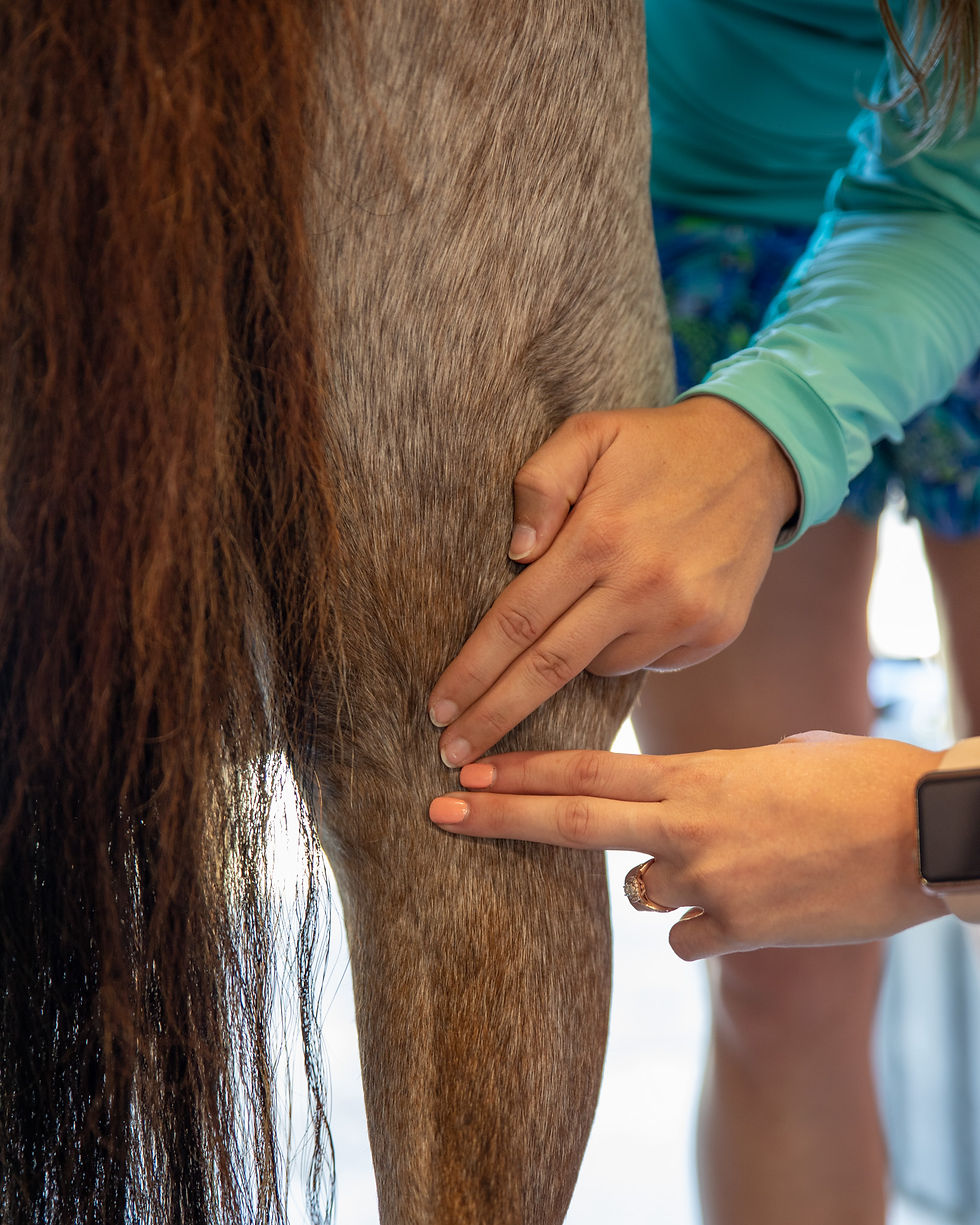
Horses carry an enormous amount of tension, in the poll, through the neck, across the back, and into the hindquarters, often without obvious outward signs until something gives. Performance horses, trail horses, and retirees alike accumulate tension from work, travel, trailering, hoof imbalances, and emotional stress. Acupressure works beautifully here because it addresses the whole picture, not just the symptom that's visible.
Common areas of focus include poll and neck tension, back stiffness, digestive discomfort, anxiety around work or handling, and supporting recovery after competition or injury. Point selection is guided by a combination of practitioner assessment and what the owner is looking to support — whether that's maintaining suppleness in a performance horse, easing tension after a long trailer ride, keeping the allergies away or simply keeping a beloved senior horse feeling his best. The horse's responses during the session — a soft eye, a deep exhale, that characteristic lick-and-chew — are simply confirmation that the nervous system is responding.
Some signs your dog is relaxing and responding during a session:
Head lowering
Licking & chewing
Deep sigh
Slow blinking
Relaxed lower lip
Leaning in
Acupressure for Dogs
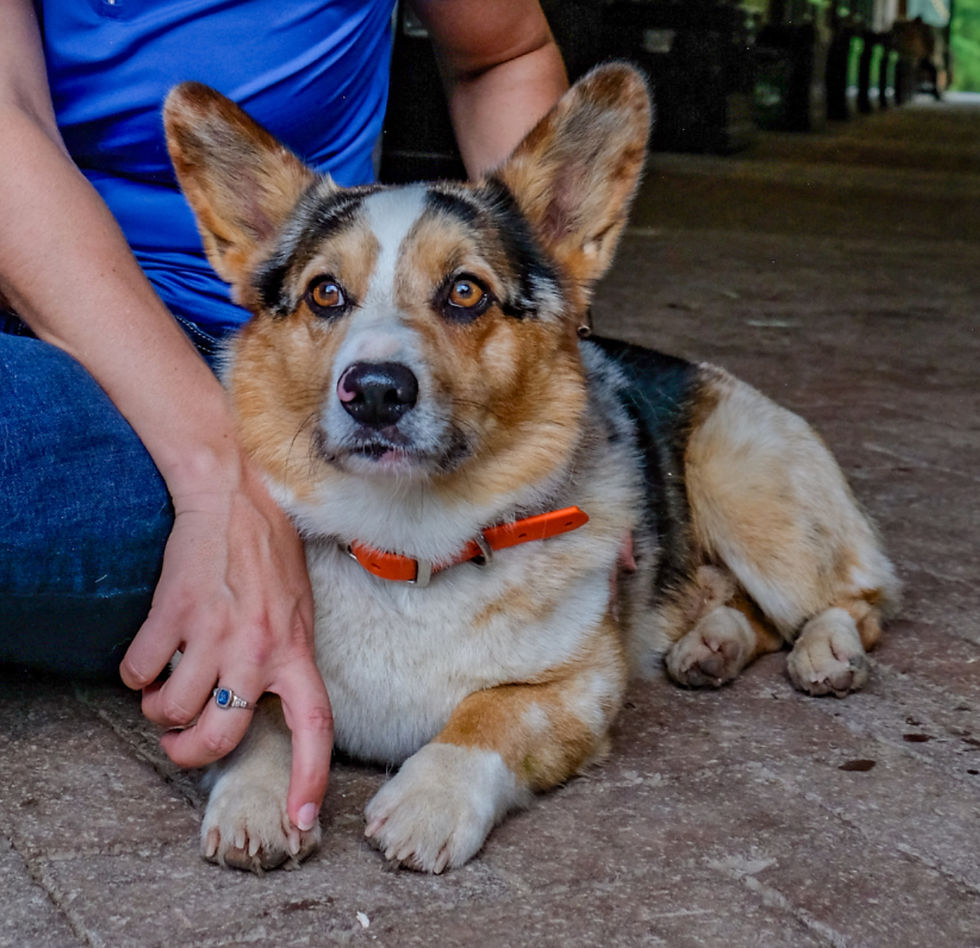
Dogs are incredibly expressive during acupressure sessions — and often surprisingly still, which is telling in itself for dogs that are usually on the move. Canine acupressure is particularly well suited as a proactive wellness practice — supporting dogs before issues have a chance to take hold. Common areas of focus include digestive support, emotional health and separation anxiety, immune function, allergy response, and keeping the nervous system regulated in dogs that tend toward stress or hypervigilance. It's also a wonderful tool for supporting young and adolescent dogs during developmental stages, and for maintaining overall balance in healthy adult dogs so that wellness becomes a habit rather than a reaction. Prevention is always easier than recovery.
Some signs your dog is relaxing and responding during a session:
Settling & stillness
Yawning
Soft eyes
Slow blinking
Audible sigh
Acupressure for Cats

Cats are masters at hiding discomfort, which makes proactive wellness work especially important for them. By the time a cat is showing obvious signs of pain or dysfunction, the issue has often been present for a while. Acupressure offers a low-stress, low-stimulation way to work with cats that respects their nature, sessions are typically shorter and gentler, following the cat's lead entirely.
Feline acupressure is commonly used to support kidney and urinary health, reduce chronic stress, address musculoskeletal stiffness particularly in senior cats, and support overall immune function. Many cats that are touch-sensitive in daily life will actively seek contact during a session once they understand what's happening.
Some signs your dog is relaxing and responding during a session:
Purring
Slow blinking
Kneading
Seeking contact
Relaxed posture
The prevention piece — why this matters before something goes wrong
One of the most important things acupressure offers that tends to get overlooked is its role as a proactive wellness tool. Most people think about bodywork for their animals the same way they think about going to the doctor — something you do when there's a problem. But the animals that benefit most from regular acupressure sessions are often the ones that look completely fine on the surface.
Tension accumulates quietly. Compensation patterns develop slowly. A horse that's been subtly guarding a sore spot will eventually show it in their movement, their behavior, or their willingness — but by then, the body has already been working around the issue for weeks or months. Regular sessions catch those patterns early, support the body in staying balanced, and give you a much clearer picture of how your animal is actually doing.
It's the difference between maintenance and repair. And maintenance is always the better story.
The Short Answer to "Does Acupressure Work?"
You already know the answer. You knew it before you finished reading this. You've felt it in your own body, trusted it in the products you use, and now you have the framework to understand why. The question was never really whether acupressure works — it was whether you had enough context to recognize that it already has.
For your animals, that same system is available. The same points, the same pathways, the same potential for supporting balance, relieving tension, and maintaining wellness as an ongoing practice rather than a last resort. Whether you have a horse carrying tension through his poll, a dog that struggles with anxiety or digestive upset, or a senior cat who deserves every bit of support you can offer — acupressure is a tool worth having in your corner.
The best time to start supporting your animal's wellness is before something goes wrong. The second best time is right now.
Want to learn how to do this yourself?
Whether you're an owner who wants to support your own animals at home or a professional looking to deepen your knowledge and expand your practice — there's a course built for exactly where you are.
Owner & Enthusiast
Species-specific owner courses covering the foundations of acupressure, key wellness points, and how to apply them confidently at home. No background required.
Five Element Theory Level II — for owners ready to dive deeper into the full framework
Professional & Advanced Learning
Comprehensive professional training covering meridian systems, assessment techniques, Zang-Fu organ theory, special point categories, and an introduction to photopuncture.
All courses are self-paced, available anytime, and approved for continuing education hours. You can learn on your schedule, at your own pace, and apply what you learn immediately.
If you're in the Charlotte or Waxhaw, NC area and want to experience a session firsthand for your horse, dog, or cat — or if you just have questions about where to start — visit polltopastern.com or reach out directly. This work is worth understanding, and your animal is worth the investment.


