
Equine Acupressure Training: Professional Certification Guide
Updated: Feb 17

The equine industry has seen a steady shift toward integrative care over the past decade. Horse owners, trainers, and veterinarians alike are recognizing that performance, longevity, and overall well-being are influenced by far more than conditioning and medical intervention alone. As a result, complementary modalities that support the nervous system, musculoskeletal balance, and energetic health have become increasingly sought after.
Within this expanding landscape, equine acupressure has emerged as a respected and in-demand professional service. Rooted in Traditional Chinese Medicine, acupressure works through specific points along meridian pathways to support the body’s natural regulatory processes. When applied skillfully and ethically, it complements veterinary care and supports horses across a wide range of needs—from performance support to recovery and long-term wellness.
As interest in equine acupressure grows, so does the number of courses and certifications available. However, not all training programs are created equal. Many offerings focus on introductory knowledge or a small selection of points, which may be appropriate for personal education but fall short of what is required for professional practice.
Professional-level equine acupressure training demands a deeper commitment. It requires comprehensive anatomical understanding, a solid foundation in meridian theory and Traditional Chinese Medicine, structured assessment skills, and hands-on application guided by professional standards. The difference between hobbyist education and professional certification lies not only in the volume of information, but in the depth, structure, and accountability of the training.
This guide is designed for individuals who are considering equine acupressure as a professional path. Whether you are an equine professional looking to expand your services or someone seeking a formal certification, understanding what defines legitimate, high-quality training is essential before choosing a program.
What Is Professional-Level Equine Acupressure Training?
Professional-level equine acupressure training is defined by depth, structure, and accountability. It goes far beyond learning individual points or following preset routines. Instead, it prepares practitioners to understand why certain points are chosen, how they interact within the body, and when acupressure is appropriate within a broader care framework.
Depth of Anatomical Study Required

At the professional level, anatomical education is foundational rather than supplementary. Practitioners must develop a working understanding of:
Skeletal landmarks and joint relationships
Major muscle groups and myofascial lines
Neurological pathways and proprioceptive feedback
The physical locations and functions of internal organs
This knowledge allows acupressure to be applied with precision and safety, ensuring points are located accurately and pressure is appropriate for each individual horse.
Meridian Theory and Traditional Chinese Medicine Foundations
Professional training includes comprehensive study of meridian systems as complete pathways, not isolated points. This involves:
Yin and Yang relationships
Five Element Theory and elemental correspondences
Zang-Fu organ theory
Seasonal and constitutional influences on the body
Understanding these principles enables practitioners to recognize patterns rather than addressing symptoms in isolation.
Hands-On Skill Development
Acupressure is a tactile practice. Professional education emphasizes:
Palpation skills and tissue assessment
Reading subtle changes in muscle tone, temperature, and response
Recognizing behavioral and energetic feedback from the horse
Adjusting technique based on individual sensitivity and condition
These skills are developed through guided practice, observation, and repetition, not solely through written material.

Assessment Techniques
Rather than applying the same points to every horse, professional practitioners are trained to assess before selecting points. Assessment may include:
Visual observation of posture and movement
Palpation for tension, imbalance, or asymmetry
Behavioral and emotional presentation
Energetic patterns related to meridians and organ systems
Assessment guides session structure and supports intentional, individualized work.
Professional Standards and Ethics
Professional-level training also establishes clear ethical guidelines, including:
Understanding scope of practice
Knowing when to refer to a veterinarian or other professional
Clear client communication and informed consent
Documentation and record-keeping standards
These standards protect the horse, the client, and the practitioner, and are essential for building a credible professional practice.
Professional Applications of Equine Acupressure
When practiced at a professional level, equine acupressure is a versatile modality that can be applied across a wide range of settings. Certified practitioners are trained to adapt their approach based on the horse’s workload, environment, and individual presentation, making acupressure a valuable addition to modern equine care programs.
Pre- and Post-Event Support for Performance Horses

In performance settings, equine acupressure is often used to support horses before and after competition or intense work. Pre-event sessions may focus on promoting relaxation, mental focus, and balanced muscle tone, while post-event sessions support recovery from physical and neurological stress. These applications are particularly valuable for horses involved in disciplines that place high demands on coordination, stamina, and emotional regulation.
Injury Recovery Support
Equine acupressure is frequently integrated into recovery programs following injury, under the guidance of veterinary care. Professional practitioners understand how to work within appropriate boundaries, offering supportive sessions that address compensation patterns, nervous system stress, and areas of chronic holding that may develop during rehabilitation. This integrative approach supports the horse’s overall comfort and resilience during recovery.
Integration With Veterinary Care
One of the hallmarks of professional acupressure training is the ability to collaborate effectively with veterinarians. Practitioners are trained to observe and communicate relevant findings, respect medical diagnoses, and operate within clearly defined scope-of-practice guidelines. This collaborative model helps ensure that acupressure remains a supportive modality rather than a replacement for veterinary treatment.
Barn Management and Maintenance Programs
Many professional acupressure practitioners work within barns or training facilities to provide routine maintenance sessions. These programs may be structured around seasonal transitions, training intensity, or herd-wide wellness goals. Regular sessions can help identify developing patterns early, supporting long-term soundness and overall well-being.
Mobile Practice Opportunities
Equine acupressure is well-suited to mobile practice models. Certified practitioners often travel to barns, training facilities, and competition venues, offering services that integrate seamlessly into existing care routines. Professional training prepares practitioners to approach scheduling, client communication, and documentation with consistency and professionalism—skills that are essential for operating within a mobile or barn-based practice setting.
Educational Requirements for Professional Practice
Professional equine acupressure practice is built on formal education, accountability, and ongoing development. While equine acupressure is a non-invasive modality, working responsibly with horses requires structured training that aligns with recognized professional standards.
NBCAAM Recognition and Why It Matters
One of the most important markers of professional credibility in equine acupressure education is recognition by the National Board of Certification for Animal Acupressure and Massage (NBCAAM). This organization establishes educational and ethical benchmarks for animal acupressure and massage practitioners.
NBCAAM-recognized education helps ensure that training programs meet minimum standards for:
Depth of curriculum
Ethical practice guidelines
Professional accountability
Eligibility for certification pathways
For practitioners, completing recognized coursework provides confidence to clients and supports professional legitimacy within the equine industry.
Course Hour Requirements
Professional certification pathways typically include a combination of online and in-person education. Online coursework allows for in-depth study of theory, anatomy, and assessment principles, while in-person training focuses on hands-on application, palpation skills, and real-time observation of horses.
For those pursuing NBCAAM certification, a minimum of 50 in-person training hours is required as part of the overall education process. These hours are essential for developing practical skills that cannot be fully replicated through online study alone.
Continuing Education Expectations
Professional practice does not end with initial certification. Ongoing continuing education allows practitioners to refine their skills, stay current with evolving standards, and deepen their understanding of complex cases. Many professionals pursue additional coursework in advanced theory, specialized applications, or related modalities to support long-term career growth.
State Regulations and Scope of Practice
Regulatory requirements for equine acupressure vary by location. Professional training prepares practitioners to understand and respect scope-of-practice boundaries, ensuring that acupressure remains a supportive modality and does not replace veterinary diagnosis or medical care. Clear education around scope protects the horse, the client, and the practitioner.
What to Look for in a Professional Training Program
With the growing popularity of equine acupressure, the number of available courses has increased significantly. While this provides more access to education, it also makes it essential for prospective practitioners to evaluate training programs carefully. Not every course that offers a certificate meets professional-level standards.
Instructor Credentials

One of the most important factors to consider is the instructor’s professional background. A legitimate training program should be taught by an instructor who is NBCAAM-certified and actively engaged in professional practice. Instructor credentials reflect not only educational attainment but also adherence to ethical and professional standards within the field.
Prospective students should look for transparency around instructor qualifications and professional experience.
Curriculum Comprehensiveness
Professional training programs offer a structured curriculum that goes beyond introductory concepts. A comprehensive program includes anatomy, meridian theory, assessment methods, and case-based learning. Programs that focus primarily on memorizing point locations without context may be suitable for personal interest but are not sufficient for professional practice.
Depth, organization, and progression of material are key indicators of quality education.
Live Horse Demonstrations vs. Diagrams Only
While diagrams and charts are valuable learning tools, professional training should include instruction on live horses. Observing how horses respond to palpation, pressure, and energetic shifts is critical for developing practical skill. Video demonstrations or in-person sessions with real horses provide context that static images cannot convey. Programs that rely solely on diagrams may leave students unprepared for real-world application.
Certification Pathway Clarity
A professional program should clearly outline:
Required coursework
Assessment methods
Case study expectations
Any in-person training components
The process for completing certification
Clarity ensures students understand what is required and can plan their education accordingly.
Continuing Education Credit Recognition
For those seeking professional recognition, it is important to verify whether coursework counts toward continuing education or certification requirements. Programs that clearly state their relationship to recognized credentialing bodies demonstrate transparency and professional alignment.
Course Content: Professional-Level Expectations
A professional equine acupressure certification program is defined by the depth and integration of its coursework. Rather than teaching techniques in isolation, high-quality training weaves anatomy, Traditional Chinese Medicine theory, assessment skills, and practical application into a cohesive educational framework.
In-Depth Meridian Study
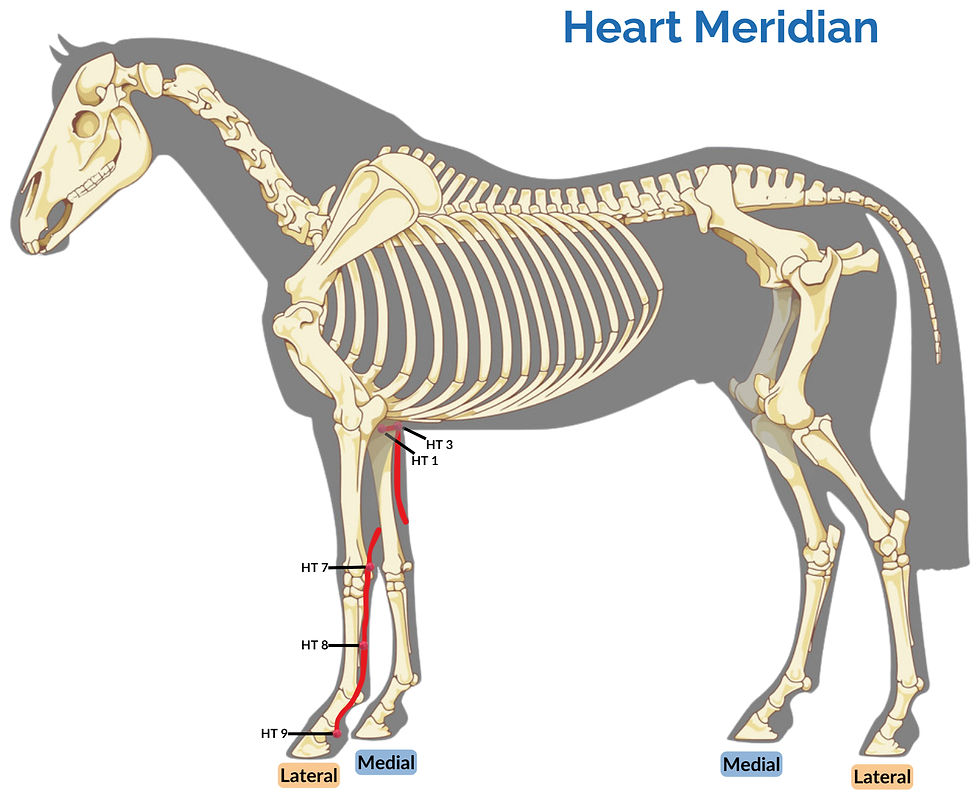
Professional programs include comprehensive study of major meridian systems, such as the Bladder, Kidney, Liver, Spleen, Stomach, Gallbladder, Heart, and Pericardium meridians. Students learn full meridian pathways, energetic functions, and how these systems interact with one another. This level of understanding allows practitioners to recognize patterns and relationships rather than working point-by-point without context.
Acupoint Categories and Functional Roles
Rather than focusing only on commonly used points, professional training introduces acupoint categories and their energetic significance. These include:
Source points
Alarm points
Master points
Influential points
Connecting points
Jing-Well points
Understanding point categories helps practitioners select points strategically based on assessment findings and energetic goals.
Vital Substances
Professional education includes study of the Vital Substances that underpin Traditional Chinese Medicine theory, including Qi, Blood, Jing, Shen, and Body Fluids. Practitioners learn how imbalances in these substances may present physically or behaviorally in the horse and how acupressure can be used to support overall balance.
Zang-Fu Organ Theory
Zang-Fu theory forms the foundation of pattern recognition in equine acupressure. Professional programs teach how organ systems relate to meridians, emotional states, and physiological function. This framework supports deeper understanding of chronic patterns, seasonal tendencies, and constitutional influences.
Assessment Protocols

A structured assessment process is essential at the professional level. Training often includes the Four Examinations framework, which integrates observation, listening, inquiry, and palpation. These tools guide practitioners in gathering information before selecting points or structuring a session.
Tongue and Pulse Assessment Fundamentals
While advanced diagnostic tools require significant study, many professional programs introduce foundational concepts of tongue and pulse assessment. These tools help practitioners observe internal patterns and track changes over time without replacing veterinary diagnostics.
Pattern Recognition and Differentiation
Rather than applying standardized routines, professional training emphasizes recognizing energetic patterns and differentiating between them. This skill allows practitioners to tailor sessions to the individual horse, taking into account history, presentation, and environmental factors.
Case Study Analysis
Case studies are a core component of professional certification. Students learn to document assessments, point selection rationale, session outcomes, and follow-up observations. This process reinforces critical thinking and supports professional accountability.
Documentation and Record-Keeping
Professional programs teach the importance of clear documentation, including session notes, client communication records, and progress tracking. Accurate records support ethical practice, continuity of care, and professional credibility.
The Certification Path at Poll to Pastern
At Poll to Pastern, professional equine acupressure certification is designed as a structured, progressive pathway. Rather than offering isolated courses, the program builds knowledge and skill step by step—ensuring students develop a strong foundation, refined assessment ability, and confidence working with real horses. This pathway reflects professional standards, ethical practice, and long-term practitioner development.
Level I: Equine Acupressure Foundations

The Equine Acupressure Foundations course is the first step toward professional certification through Poll to Pastern. Led by a Nationally Certified Animal Acupressure Practitioner, this course establishes the essential knowledge and practical skills required to work safely, effectively, and responsibly with horses.
At this foundational level, students learn:
The foundations of acupressure, how it supports equine wellness, and the distinction between acupressure and acupuncture
Key equine anatomy and meridian systems for accurate point location
Vital Substances and Zang-Fu organ theory and how they relate to physical and emotional balance
The Bladder meridian, including Source Points and Alarm Points
Assessment techniques using the Four Examinations framework, vitality rating, tongue observation, and pulse assessment
Special acupoint categories, including Master, Influential, Connecting, and Jing-Well Points
Introductory concepts in pathology and recognizing patterns of imbalance
An introduction to photopuncture as a complementary, non-invasive tool
Students also explore how acupressure may be applied to common equine concerns such as digestive imbalance, allergies, anxiety, joint stress, and overall vitality—always within appropriate scope of practice.
Level II: Five Element Theory
Five Element Theory is a core component of Poll to Pastern’s professional equine acupressure certification pathway. This advanced course expands a practitioner’s ability to assess, interpret, and respond to complex energetic patterns beyond surface-level presentation.

In this course, students learn how each element—Wood, Fire, Earth, Metal, and Water—governs specific organ systems, emotions, behaviors, and imbalances. This framework allows practitioners to move from routine point selection to intentional, pattern-based decision-making.
The curriculum blends classical Traditional Chinese Medicine theory with species-specific insight and real-world application. Students develop the ability to adapt sessions based on constitution, season, and presenting patterns rather than relying on fixed protocols.
Throughout the course, students learn to:
Understand each Element’s related meridians, organ systems, emotional expressions, and behavioral tendencies
Recognize signs of balance, excess, and deficiency within each Element
Apply the Creation and Control Cycles to assessment and acupoint selection
Tonify or disperse energy using Mother, Child, and Controlling points
Identify an individual horse’s elemental constitution
Perform comprehensive energy pattern assessments, including Hot and Cold, Excess and Deficiency, Yin and Yang, Acute and Chronic, and Interior and Exterior patterns
Adjust sessions to align with seasonal influences
Understand and respond to the Six External Pathogens
Locate and apply key acupoints for targeted energetic support, including points used for clearing pathogenic influences
Create personalized session plans based on constitution, seasonal factors, or presenting imbalances
By integrating Five Element Theory into the certification process, practitioners gain a deeper understanding of how physical symptoms, emotional states, and environmental factors interact. This level of insight is essential for professionals seeking to provide thoughtful, preventative, and individualized acupressure sessions.
Level III: Final Assessment and Certification Completion
The Acupressure Final Exam & Case Study — Professional Level III — is the culminating assessment within the Poll to Pastern certification pathway. This advanced-level program is designed for dedicated practitioners who have completed foundational and intermediate coursework and are ready to demonstrate comprehensive knowledge, critical thinking, and professional readiness.

At this stage, students are evaluated on both theoretical understanding and practical application through a rigorous final exam and a detailed case study. Participants are required to demonstrate their ability to assess the animal as an individual, identify energetic patterns, select appropriate acupoints, and structure sessions thoughtfully and ethically.
The Level III assessment emphasizes:
Integration of anatomical knowledge, meridian theory, and Traditional Chinese Medicine foundations
Clear and methodical assessment processes
Intentional session planning based on observed patterns
Professional documentation and case analysis
Ethical decision-making and scope-of-practice awareness
This final assessment is appropriate for professionals committed to excellence in holistic animal care, including acupressure practitioners, veterinary technicians, and animal wellness professionals seeking formal recognition of their skills.
Successful completion of the Level III Final Exam and Case Study validates a practitioner’s proficiency and readiness to work at a professional level. Graduates of this stage distinguish themselves through demonstrated competence, accountability, and commitment to high standards within the field of animal acupressure.
Professional Development and Career Growth
Professional equine acupressure certification is not only about technical skill—it is about developing the confidence, communication, and professionalism needed to support horses responsibly and sustainably over time. For many practitioners, certification opens the door to meaningful career growth and expanded service offerings.
Building a Professional Practice

Certified equine acupressure practitioners may choose to build independent practices or integrate acupressure into existing equine services. A strong educational foundation supports consistency, ethical decision-making, and client trust. As practitioners gain experience, they develop systems for session structure, scheduling, documentation, and follow-up that reflect professional standards.
Adding Acupressure to Existing Equine Services
For trainers, bodyworkers, and other equine professionals, acupressure can complement current offerings. Professional training provides the framework needed to apply acupressure intentionally, communicate clearly with clients, and maintain appropriate scope of practice. This integration allows practitioners to support horses holistically while enhancing the value of their services.
Client Education and Communication
Clear communication is an essential professional skill. Certified practitioners are trained to explain acupressure concepts in accessible language, set realistic expectations, and educate clients about the supportive nature of acupressure within an overall care plan. Effective communication strengthens client relationships and supports long-term collaboration.
Collaboration With Equine Professionals
Equine acupressure practitioners often work alongside veterinarians, trainers, farriers, and other bodywork professionals. Professional education emphasizes respectful collaboration, shared observation, and ethical boundaries. This collaborative approach supports the horse’s well-being and strengthens professional credibility.
Continuing Education and Long-Term Growth
Professional development does not end with certification. Ongoing education allows practitioners to refine skills, deepen theoretical understanding, and stay aligned with evolving standards in holistic animal care. Continuing education supports both personal growth and long-term professional sustainability.
Investment in Professional Education

Professional equine acupressure training is an investment in both education and long-term professional growth. High-quality programs require thoughtful curriculum development, experienced instruction, and resources that support deep learning rather than surface-level understanding.
When evaluating the investment involved in certification, it is important to consider more than course cost alone. Factors such as curriculum depth, instructor credentials, hands-on learning opportunities, and ongoing access to educational materials all contribute to the overall value of a program.
Educational Value and Return on Investment
A strong professional education equips practitioners with skills that can be applied across many years of practice. Comprehensive training supports confident assessment, ethical decision-making, and consistent application—qualities that build client trust and professional credibility over time.
For equine professionals, acupressure certification may enhance existing services, expand practice offerings, or support the development of an independent practice. The ability to apply skills across a wide range of horses and situations contributes to long-term return on educational investment.
Accessible, High-Quality Education
Poll to Pastern’s certification pathway is designed to make professional-level education accessible without compromising depth or standards. Courses are structured to allow students to progress at a manageable pace while retaining lifetime access to materials for ongoing reference and continued learning.
By offering a clearly structured pathway with layered coursework, Poll to Pastern supports both new practitioners and experienced equine professionals seeking to expand their skill set.
Certification Pathway Investment
Poll to Pastern's equine acupressure certification is structured as a three-level progressive pathway:
Level I: Equine Acupressure Foundations – $599 Comprehensive foundation in meridian theory, assessment frameworks, Bladder meridian study, Vital Substances, and practical application. Lifetime access.
Level II: Five Element Theory – $399 Advanced study of all Five Elements, Creation and Control Cycles, pattern differentiation, and constitutional assessment. Lifetime access.
Level III: Final Assessment & Case Study – $199 Comprehensive exam, guided case study development, and certification upon completion.
Total Certification: $1,197 (comparable to industry programs ranging from $1500-2500+)
What's Included:
Lifetime access to all course materials and updates
Self-paced learning with no expiration
Professional-level curriculum aligned with NBCAAM standards
Instruction by Nationally Certified Animal Acupressure Practitioner
Specialized Five Element Theory education
No recurring fees or hidden costs
Students may complete levels individually or enroll in multiple courses at once, progressing at a pace that fits their schedule and goals. Explore the Equine Acupressure Foundations Course and begin your certification journey today.
Flexible Learning Options
Online coursework allows students to engage with material in a way that fits individual schedules, while case studies provide essential hands-on experience. This balance supports effective learning while respecting the practical realities of working equine professionals.
Frequently Asked Questions About Equine Acupressure Certification
How long does it take to complete equine acupressure certification?
The time to complete Poll to Pastern's equine acupressure certification varies based on individual pace and schedule. Most students complete Level I (Equine Acupressure Foundations) in 4-8 weeks, Level II (Five Element Theory) in 3-6 weeks, and Level III (Final Assessment & Case Study) in 2-4 weeks. The entire certification pathway typically takes 3-6 months for students studying part-time. However, because courses offer lifetime access with no expiration, you can progress at whatever pace works best for your schedule. Some students complete it faster with intensive study, while others take longer while balancing work and other commitments.
Do I need prior experience with horses to enroll in this program?
You should have experience handling and working around horses safely before beginning professional acupressure training. This program is designed for horse owners, trainers, barn managers, equine massage therapists, veterinary technicians, and other equine professionals who already have foundational horsemanship skills. You do not need prior experience with acupressure, Traditional Chinese Medicine, or bodywork—the course teaches these concepts from the ground up. What matters most is that you are comfortable reading equine behavior, handling horses safely, and have regular access to horses for practice as you learn.
Is Poll to Pastern's certification recognized by NBCAAM?
Poll to Pastern's curriculum is structured to align with NBCAAM (National Board of Certification for Animal Acupressure and Massage) educational standards. Our courses are taught by a Nationally Certified Animal Acupressure Practitioner and cover the theoretical foundations required for professional practice. To pursue full NBCAAM certification, students must complete a minimum of 200 hours of education, including 50 in-person training hours with horses. Poll to Pastern's online coursework contributes to the educational hour requirements, and students can fulfill in-person training through our optional hands-on intensives. We provide documentation of completed coursework to support your certification application.
Can I practice equine acupressure professionally after completing this certification?
Yes, upon completing all three levels and your case study, you will have the knowledge and skills to offer professional equine acupressure services. However, it's important to understand scope of practice: equine acupressure is a supportive, complementary modality that works alongside veterinary care—not as a replacement for it. You will learn to assess horses, select appropriate acupoints, and provide sessions ethically and safely. Many graduates offer acupressure as an independent service, integrate it into existing equine businesses (training, massage, boarding facilities), or work with veterinarians as part of integrative care teams. State regulations vary, so we recommend researching your local requirements for animal bodywork practitioners.
What is the difference between equine acupressure and equine acupuncture?
Acupuncture involves inserting fine needles into specific points on the body and is considered a veterinary medical procedure in most states—meaning it must be performed by a licensed veterinarian or under direct veterinary supervision. Acupressure uses manual pressure (typically fingers, thumbs, or hands) on the same acupoints and meridian systems but without needles, making it non-invasive. While both modalities are rooted in Traditional Chinese Medicine and work with the body's energetic systems, acupressure is generally accessible to trained non-veterinary practitioners as a complementary bodywork modality. Acupressure is often used for wellness maintenance, relaxation, and supportive care, while acupuncture may be used for more intensive therapeutic interventions under veterinary oversight.
How much does equine acupressure certification cost?
Poll to Pastern's complete equine acupressure certification pathway costs $1,197 total, broken down as follows: Level I (Equine Acupressure Foundations) is $599, Level II (Five Element Theory) is $399, and Level III (Final Assessment & Case Study) is $199. This includes lifetime access to all course materials with no recurring fees or hidden costs. For comparison, most professional equine acupressure certification programs range from $1,500 to $2,500+. For example, Angel's Animals' equine acupressure certification is $2,500. Poll to Pastern offers comprehensive, professional-level training aligned with NBCAAM standards for less than half the cost of many comparable programs—while still including specialized Five Element Theory education that often requires separate advanced coursework elsewhere.
Is the coursework online or do I need to attend in-person classes?
All three levels of Poll to Pastern's equine acupressure certification are available as self-paced online courses, which means you can complete the theoretical education from anywhere with an internet connection. The online format includes video instruction, downloadable charts and guides, case examples, and detailed written materials. However, if you plan to pursue full NBCAAM certification, you will need to complete 50 in-person training hours working with live horses as part of your overall 200-hour education requirement. Poll to Pastern periodically offers optional hands-on intensives in Charlotte, NC, and surrounding areas, or you may fulfill in-person hours through other NBCAAM-recognized programs. The online coursework provides the essential theoretical foundation, while in-person training develops hands-on palpation and assessment skills.
Will I be able to work with horses immediately after Level I, or do I need to complete all three levels?
After completing Level I (Equine Acupressure Foundations), you will have learned fundamental meridian theory, key assessment frameworks, and specific acupoints—enough to begin practicing supportive acupressure sessions with horses you know well (such as your own horse or horses in your care). However, Level I is designed as a foundation that will be deepened significantly through Level II (Five Element Theory) and validated through Level III (Final Assessment & Case Study). Most students find that their confidence, pattern recognition skills, and ability to tailor sessions to individual horses improve dramatically after completing all three levels. If you plan to offer professional services to clients, completing the full certification pathway and gaining practical experience through case studies is strongly recommended to ensure you can work safely, ethically, and effectively.
Can I take the courses at my own pace, or are there deadlines?
All Poll to Pastern courses are completely self-paced with lifetime access and no expiration dates. There are no enrollment deadlines, no pressure to finish by a certain date, and no recurring fees. You can take as long as you need to absorb the material, practice techniques, and complete your case studies. Some students work through the content intensively over a few months, while others spread it out over a year or more while balancing other commitments. You can also revisit course materials at any point in the future for refreshers or deeper study. The only timeline consideration is that if you plan to pursue NBCAAM certification, you'll want to track your study hours and complete all requirements within a timeframe that works for your professional goals—but that timeline is entirely up to you.
Conclusion: Choosing Quality Training and Your Next Steps
Equine acupressure is a powerful modality when practiced with knowledge, intention, and professional integrity. As interest in complementary therapies continues to grow, the importance of quality education becomes increasingly clear. Professional-level training provides the depth, structure, and ethical framework required to support horses responsibly and confidently.
Choosing a certification program is not simply about earning a credential—it is about committing to ongoing learning, critical thinking, and professional standards. A comprehensive educational pathway prepares practitioners to assess thoughtfully, apply acupressure intentionally, and collaborate respectfully within the broader equine care community.
For those seeking a clear, structured path toward professional equine acupressure certification, Poll to Pastern offers a progressive program built on strong foundations, advanced theory, hands-on experience, and real-world application.
The Equine Acupressure Foundations Course is the first step in this professional pathway. From there, students advance through Five Element Theory, case study development, in-person training, and final assessment—building skills and confidence at every stage.
👉 Explore the Equine Acupressure Foundations Course and begin your certification journey today.


