
The Shen in Horses: Emotional Presence, Awareness, and Balance

Horses are highly sensitive, perceptive animals, deeply influenced by their environment and the emotional energy around them. Their responses are shaped not only by physical condition, but also by their internal emotional and energetic state. In Traditional Chinese Medicine (TCM), this inner state is closely connected to the Shen—often described as the spirit, awareness, or emotional presence.
The Shen plays a central role in how a horse experiences the world. It influences attentiveness, emotional regulation, adaptability, and the ability to remain present during periods of change or demand. When the Shen is balanced, horses often appear calm, responsive, and mentally available. When it becomes unsettled, emotional tension may show up subtly through posture, breath, eye expression, or patterns of holding in the body.
Because horses communicate so much through body language, understanding the Shen offers valuable insight into the mind–body connection. Rather than viewing tension, resistance, or inconsistency as isolated issues, TCM invites us to look at how emotional balance is being expressed physically. This perspective allows for more thoughtful support that honors both the horse’s emotional experience and their physical well-being.
In this blog, we’ll explore what the Shen means in horses, how it shows up through emotional presence and the body, and gentle, supportive ways to encourage balance through a Traditional Chinese Medicine lens. By learning to observe the Shen, we gain a deeper understanding of the horse as a whole being—mind, body, and spirit working together.
What Is the Shen in Traditional Chinese Medicine?
In TCM, the Shen is often translated as “spirit,” but its meaning extends far beyond that word alone. The Shen represents awareness, emotional balance, consciousness, and the ability to be present and responsive. In horses, the Shen reflects how they perceive and process their environment, how they regulate emotion, and how comfortably they engage with the world around them.
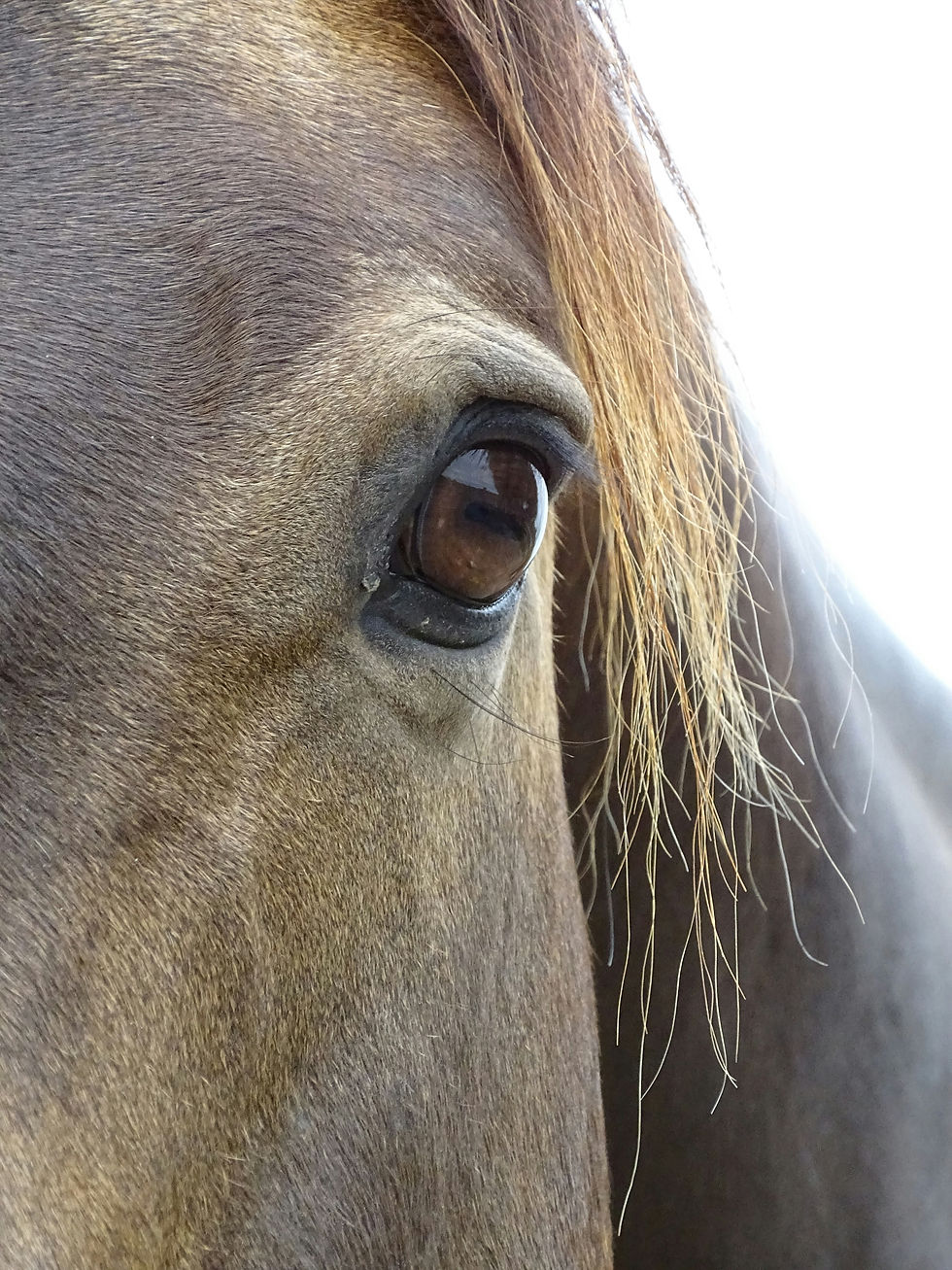
Many horse owners instinctively understand this concept, even if they’ve never used the word Shen. It’s common to hear people say that a horse’s spirit shows in their eyes, or that something feels different when a horse is emotionally unsettled. These observations align closely with TCM, which developed through careful study of the natural world, animals, and repeated patterns over time. Rather than being abstract or symbolic, TCM concepts like the Shen were named to describe what people consistently observed, long before modern terminology existed.
In horses, the Shen is often most clearly reflected through the eyes. Softness, brightness, and ease in the gaze commonly suggest a settled emotional state, while tension, dullness, or an overly fixed expression may indicate emotional strain or internal imbalance. Because horses communicate so much without words, changes in the eyes are often one of the earliest indicators that the Shen is unsettled—long before more obvious physical or behavioral patterns appear.
Shen is housed in the Heart, which in TCM governs emotional regulation, clarity, and connection. When the Heart is balanced, the Shen is able to settle. When the Heart is strained—by stress, environmental pressure, physical discomfort, or emotional overwhelm—the Shen may become unsettled. This does not indicate a flaw in the horse, but rather a state that is responding to internal or external demands.
Unlike temperament or personality, the Shen is dynamic. It can shift based on life stage, workload, environment, social dynamics, and seasonal influences. A horse may have a naturally steady presence yet experience periods where emotional balance feels disrupted. Likewise, a more sensitive horse can still have a deeply settled Shen when supported appropriately.
Understanding the Shen through a TCM lens helps reframe how we interpret a horse’s responses. Emotional expression, tension patterns, and changes in presence are viewed not as isolated issues, but as reflections of the horse’s internal state. This perspective encourages observation over judgment and supports approaches that prioritize emotional balance alongside physical well-being.
The Shen Revealed Through the Eyes in Horses

In TCM, the Shen is said to be revealed through the eyes, and nowhere is this more apparent than in horses. Long before physical tension becomes obvious, changes in the eyes often reflect shifts in emotional balance, awareness, and internal regulation. This aligns closely with what many horse owners already recognize instinctively as the “spirit” of the horse.
When the Shen is settled, a horse’s eyes tend to appear soft, clear, and responsive. There is a sense of presence without tension—awareness without hypervigilance. The gaze feels open and engaged, and the horse appears emotionally available rather than guarded or distant. These qualities often accompany a calm nervous system and an ability to process the environment without becoming overwhelmed.
When the Shen is unsettled, subtle changes may appear in the eyes. The gaze may become fixed, dull, overly intense, or withdrawn. Some horses show a distant or disconnected look, while others appear alert but unable to soften. These expressions are not signs of defiance or lack of training; they often indicate that the horse is emotionally processing more than they can comfortably integrate.
Because horses are prey animals, their eyes naturally reflect heightened awareness at times. Shen observation is not about labeling every alert moment as imbalance, but about noticing patterns over time. A consistently guarded gaze, lack of softness, or difficulty returning to a relaxed expression may suggest emotional strain that deserves gentle support.
Learning to observe the eyes alongside posture, breath, and movement offers a fuller picture of emotional balance. In acupressure and TCM, changes in the eyes are often one of the earliest indicators that the Shen is shifting—sometimes well before physical tension or behavioral changes become obvious.
By honoring what the eyes reveal, caregivers can respond with greater sensitivity and intention. This awareness supports earlier intervention, deeper understanding, and more compassionate care that respects the horse’s emotional experience as much as their physical body.
Shen, Emotional Balance, and Physical Expression in Horses
Horses express their internal emotional state through the body as much as through behavior. Because the Shen reflects awareness, emotional regulation, and presence, changes in Shen balance often appear as subtle physical patterns long before more obvious signs emerge. Learning to observe these patterns helps reveal how the mind and body are working together.

One common way Shen imbalance shows up is through posture and muscle holding. Horses with a settled Shen often move with ease, showing fluid transitions and an organized, relaxed way of carrying themselves. When the Shen is unsettled, tension may appear as bracing, guarded movement, or rigidity that does not fully resolve with physical work alone.
The poll, jaw, and upper neck are especially sensitive areas for emotional holding. These regions are closely associated with awareness, responsiveness, and the horse’s ability to soften mentally as well as physically. Tightness, resistance to release, or habitual holding in these areas may reflect emotional strain rather than simple muscular restriction.
Breath and overall rhythm also offer valuable insight into Shen balance. A horse with a calm, settled Shen tends to breathe evenly and recover smoothly after stimulation or exertion. When emotional regulation is challenged, breathing may become shallow, irregular, or slow to return to baseline—even when the horse is physically capable of the demands being placed on them.
It’s important to recognize that these expressions are not faults or failures. They are forms of communication. From a TCM perspective, the body offers a window into the emotional state, allowing caregivers to respond with support rather than correction. Rather than asking what is “wrong” with the body, Shen awareness invites us to consider what the body may be responding to emotionally.
Recognizing emotional holding does not mean ignoring physical needs. Instead, it acknowledges that physical and emotional balance are inseparable. When the Shen begins to settle, the body often follows—softening, reorganizing, and responding more readily to supportive care. By observing posture, tension patterns, breath, and presence together, caregivers gain a clearer picture of how the Shen is influencing the horse’s overall balance and well-being.
Supporting Shen Balance in Horses
Supporting the Shen in horses begins with creating conditions that allow emotional regulation to settle naturally. Because the Shen reflects awareness, presence, and emotional balance, support is less about forcing change and more about reducing strain on the nervous system while encouraging calm, organized responses.
Environment, Routine, and Emotional Safety
Horses are deeply influenced by their environment. Consistency in daily routines, handling, and expectations helps support emotional steadiness and reduces unnecessary stress. Predictable patterns—such as turnout schedules, feeding times, and quiet recovery periods—allow the Shen to feel anchored and supported.
Emotional safety is just as important as physical safety. Horses benefit from adequate downtime, low-pressure interactions, and space to process stimulation. When emotional demand exceeds a horse’s ability to regulate, the Shen may become unsettled, even if the horse appears physically capable. Adjusting expectations and allowing for recovery helps prevent emotional overload.
Acupressure and Energetic Support

Acupressure supports Shen balance by influencing the flow of energy through the meridians, helping the body shift from heightened alertness into a more regulated state. When applied with awareness and patience, acupressure provides gentle input that supports emotional settling rather than forcing release.
In TCM, meridians associated with emotional regulation—such as those connected to the Heart and Pericardium—are often involved in supporting the Shen. Grounding channels may also be used to help anchor excess emotional energy. The effectiveness of acupressure lies not in pressure or duration, but in timing, presence, and observation. Subtle changes in breathing, posture, or eye softness often signal when the Shen is beginning to settle.
Short, consistent sessions are typically more supportive than longer or more intense interactions. Over time, regular energetic support can help horses develop greater emotional resilience and an improved ability to transition between activity and rest.
Learning to support the Shen through acupressure begins with understanding how the meridian system reflects emotional and energetic balance. Knowing where to work, why certain areas influence emotional regulation, and how to observe a horse’s response allows acupressure to be used with greater confidence and intention. For horse owners looking to deepen this understanding, online education can provide valuable guidance in recognizing patterns, selecting supportive approaches, and building consistency over time.
Educational tools such as acupressure charts offer a visual foundation for learning key meridians and focus areas, while in-depth courses expand on how these systems relate to emotional balance, seasonal influences, and the Five Element Theory. Developing this knowledge helps transform acupressure from a collection of techniques into a thoughtful, responsive practice that supports the horse as a whole.
Photopuncture Support

For horses that are sensitive to hands-on work or carry emotional tension that makes touch challenging, photopuncture offers a gentle alternative. Red and near-infrared light may be used to support emotional regulation without physical manipulation, making it especially useful during periods of heightened sensitivity.
Light-based support can be incorporated before or after activity, or during calm routines, allowing the horse to remain comfortable and unrestrained. Because this approach does not require sustained contact, it supports Shen balance while respecting the horse’s need for space and autonomy.
Supporting the Shen is an ongoing process rather than a one-time intervention. By combining thoughtful environment management with gentle energetic support, caregivers can help horses feel more settled, present, and emotionally resilient over time.
Why Understanding the Shen Changes Everything for Horses
When we begin to view horses through the lens of the Shen, the way we interpret their responses naturally shifts. Rather than separating emotional expression from physical condition, Shen awareness invites us to see both as part of the same integrated system. Subtle changes in presence, posture, breath, or eye expression are no longer isolated observations, but meaningful signals about the horse’s internal state.
Understanding the Shen encourages a more compassionate and responsive approach to care. Instead of asking how to correct a behavior or release a specific area of tension, we begin to ask what the horse may be experiencing emotionally and energetically. This perspective allows support to be offered earlier—often before imbalance becomes more pronounced or difficult to resolve.

Shen awareness also deepens connection. Horses are highly perceptive and responsive to emotional nuance, and when their internal state is acknowledged, they often respond with greater softness and trust. Supporting the Shen is not about changing who the horse is, but about creating the conditions that allow them to feel safe, present, and emotionally available.
By recognizing the role of the Shen, caregivers gain a clearer understanding of how emotional balance influences physical expression, adaptability, and overall well-being. This holistic perspective honors the horse as a whole being—mind, body, and spirit—and provides a foundation for thoughtful, supportive care that evolves alongside the horse over time.
Conclusion: Supporting the Whole Horse Through Shen Awareness
Understanding the Shen offers a deeper way of seeing the horse—one that honors emotional presence alongside physical expression. By observing the eyes, posture, breath, and patterns of holding through a Traditional Chinese Medicine lens, we begin to recognize how emotional balance shapes the horse’s overall well-being. These insights invite us to respond with awareness, patience, and thoughtful support rather than focusing solely on isolated symptoms or surface-level changes.
Supporting the Shen is not about fixing or forcing, but about creating conditions that allow the horse to feel settled, safe, and emotionally regulated. When the Shen is supported, the body often follows with greater ease, softness, and adaptability. Over time, this approach fosters resilience, trust, and a more harmonious relationship between horse and caregiver.
Continue Learning: Acupressure, the Shen, and the Five Elements

For those who want to explore Shen support more deeply, structured education can provide clarity and confidence. Learning how the meridian system reflects emotional balance, how acupressure influences regulation, and how the Five Element Theory connects emotional and physical patterns allows caregivers to support their horses with greater intention.
If you’re interested in building this foundation, our Equine Acupressure educational resources offer guidance on understanding meridians, observing responses, and applying acupressure thoughtfully. Visual tools such as equine acupressure charts can support hands-on learning, while in-depth courses expand on emotional balance, Shen awareness, and the Five Elements from a Traditional Chinese Medicine perspective.
By continuing to learn and observe through this holistic lens, you can support your horse not just physically, but emotionally and energetically—honoring the whole being in front of you.


